obstinate rigor with a side of grace
Why meditate?
Friends,
It’s been awhile.
Lately - as my plate has filled up with grad school work - I’ve been contemplating my “why” behind this blog/newsletter. Why do I care if actors meditate? What more do I have to offer a field already crowded with masterful artists, great thinkers and those blending the two, as I’m attempting?
The truth is, I don’t care if every actor meditates, and I certainly don’t think every one should. There are different paths for different people, and each person - each artist - has to find their own. That is true not only spiritually but artistically, and unfortunately that fact tends to get lost in the proliferation of training programs churning out actors according to a certain template. The truth is that every actor, every artist, will (hopefully) spend a lifetime finding out what works for them, what they need, what kinds of physical and vocal training and exercise they prefer, what spiritual support they require, what kind of warm-up works best on which day.
Actor, know thyself is advice we can live into for all of our days, and the answers for each of us will be different.
Then I came across a quote I’d been saving for years without realizing it. Sitting in an email draft all by itself was this beauty from none other than Leonardo da Vinci (an artist/thinker combo if ever there was one):
Artists must preside over their states of consciousness with obstinate rigor.
Artists must preside over their states of consciousness with obstinate rigor, he wrote 500 years before the internet.
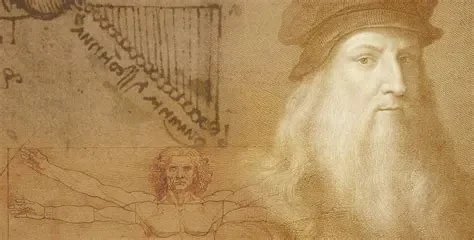
this guy was obstinately rigorous, and aren’t we the better for it?
We are now in an age where, I would argue, everyone must preside over their states of consciousness with obstinate rigor. In the era of screens, mental health is suffering, attention spans are shortening, brain rot is proliferating. We’ve just received confirmation — as if we needed it — that AI usage is, in fact, flattening human thought. The time it takes me to put together a coherent set of thoughts to send to you (in between checking my email, reading & writing for school, adding to the grocery list and being bombarded by notifications from my daughter’s school app) is often pathetic. And this is after leaving social media, to the potential detriment of my career but the incredible relief of my soul.
me complaining about phones backstage
Forgive me as I turn into Grandpa Simpson, but it used to be that backstage, at half hour, valuables were collected - including cell phones - and we couldn’t be reached until the end of the performance. Now, at least in the last show I did, nearly everyone spent a portion of their backstage time (if not most of it) on their phone - scrolling social media, texting their friends or posting the ubiquitous backstage selfie. In fact, to the surprise of no one, we were asked by the theater to do so! They needed more interesting “content” for their own social media accounts.
I was not immune, but I did seem uniquely bothered by it.
How can we expect to fully inhabit another person’s life if we cannot fully inhabit our own?
How can we hold the mirror up to nature if we’re spending all our time gazing into the black mirror ourselves?
Meditation is not the be-all, end-all. It’s one tool in a toolkit. It may not be for you, but then again, it might - if you can get past the idea that your mind needs to be a certain way in order to be able to do it.
We performing artists are human, and we’re susceptible to all the things humans are susceptible to these days. Just like doctors also live in the world of diet culture and thus are susceptible to giving you food advice that may or may not be evidence-based, artists also live in the world of performativity and influencers and so we are susceptible to turning in performances that are influenced by the kinds of media we take in all day long. If what we see and hear all day is carefully curated, photoshopped, auto-tuned and displayed, then - at some level - we begin to dislike and distrust the complicated mess of reality. A certain song “is done” a certain way because someone did it that way once, and then it enters a hall of mirrors, a copy of a copy of a copy, until we’re having screlting contests because good old belting isn’t enough anymore. We’re like an ouroboros, eating our own tail.
But what humanity actually needs right now is to be reminded who we are, and so we as artists need to take back our own humanity, our own originality, our own font of creativity. We need to start presiding over our states of consciousness with a bit more obstinate rigor.
What so many performances I see desperately need is a sense of not-knowing. Groundlessness, instead of hitting all the points. Open minds, instead of hot takes. Messiness, instead of a clean, curated feed.
And there are few better ways to train in groundlessness, open-mindedness, and messiness than meditation practice.
“In acting school, teaching is weirdly premised on the idea that you need to be taught how to have emotion, how to cry and laugh. That is not a very fruitful way of going about the job. So I began to cultivate this idea of radical relaxation before every performance, every shot. You sort of empty yourself, then begin to tell the story.”
— Kathleen Chalfant
I have no idea if the wonderful Kathleen Chalfant has ever meditated in her life, but here she is preaching it from the rooftops.
Radical relaxation. Emptying yourself. Leaving yourself alone, opening the channel, becoming the vessel. Letting what wants to come through you, come through. There are a million ways to say it. It is easier said than done.
So this process of emptying ourselves is what we practice in meditation. We sit down with the mess of a mind that we have on any given day and we practice leaving it alone. We don’t practice fixing ourselves or making ourselves calm. We practice being with whatever is, and maybe letting it go on every outbreath, and maybe watching it come back on the next wave of the tide. We practice being open to whatever comes, whether it fits our idea of how we thought we should be meditating or not. We practice sitting with the feeling of groundlessness, sometimes freeing, sometimes terrifying, that is the underlying nature of reality, and certainly of every brilliant performance.
Practicing it this way, day in day out, is what gives us half a chance in hell of doing it when we stand up in front of a few hundred or few thousand people.
It’s just one way, but it’s a good one.
Like the Buddha, da Vinci was not spending his free time scrolling TikTok, but like the Buddha he also knew something about the nature of the mind and our ability to be distracted. Somehow he managed to harness this “obstinate rigor” over his mental states and spend his time painting, creating, and thinking up all manner of inventions that he never saw in his lifetime but is remembered for hundreds of years later.
Now, as a mother and a woman living in the patriarchy, I honestly don’t know much about da Vinci’s day to day life beyond what I read in Wikipedia but I’ve gotta believe there were more than a few women working in the shadows, making his food, cleaning up after him and making it possible for him to spend all his time painting, creating and inventing. So here’s the part about grace.
Obstinate rigor is a very intense, masculine way to look at things. It is the precision of the three-legged stool of mindfulness. Grace brings in the feminine (it’s the gentleness leg). We are living in the anthropocene, in late-stage capitalism, in a wild time when systems and structures are crumbling and we’re all trying to put food on the table and keep a roof over our heads. Giving ourselves yet another thing to do rigorously could just be exhausting. We need to be resourced and supported in order to do creative work, and taking care of those needs, giving ourselves grace around the reality of our lives, is paramount.
And.
Whatever we are doing, we can still preside over our state of consciousness while we do it. Mindfully washing the dishes, folding laundry or walking my dog (no phone) are some of my favorites. We may not be making art all day every day, but we can live our lives in such a way that makes the artmaking, when it does happen, more fruitful, more truthful, more ours.
da Vinci had his lifetime, during a very different period of world change. We have ours, in this one.
What will we be remembered for?
love/katie*